Positive water impact
Kemira has published a new sustainability target, relating to the positive water impact of its water business. The target measures the estimated quantity of water treated, reused and recycled, showcasing one of the largest positive environmental impacts that Kemira creates to its customers and communities. The target is aligned with Kemira’s strategic priority to double the water-related revenue and is aligned with Kemira’s most material topics as identified in the double-materiality assessment.
Estimated impacts of the target:
| Base year 2024 | Target year 2030 | |
| Total water treated, reused and recycled | 21 billion m3 | 24.5 billion m3 |
| …cumulative impact during target period | +3.5 billion m3 | |
| Total water treated reused and recycled compared to water consumption of x people | 370 million people | 430 million people |
| …cumulative impact during target period compared to water consumption of x people | +60 million people | |
*Calculations are based on estimations and assumptions
How much water is this?
Equivalent to the water
consumption of
60 million people
or population of France
EQUIVALENT TO THE WATER
VOLUME OF
1.4 million
olympic swimming pools
Impact measurement
The target will be measured annually and reported in the Sustainability Statement. It describes the impact of Kemira's product and service portfolio, and is measured through representative proxies in the portfolio to avoid double counting. Third-party has been involved in ensuring the reliability of calculations and methodologies of the target. The presented data and calculations are based on estimates and pre-defined assumptions.
Water resilience in priority basins
Through UN SDG6, Forward Faster initiative and the CEO Water Mandate, we have committed to “build water resilience across global operations and supply chains and join hands to achieve collective positive water impact in at least 100 vulnerable prioritized water basins by 2030”. The 100 chosen basins, as defined in the CEO Water Mandate Water Action Hub, are the ones identified with the highest level of opportunity for collective action from an economic and shared water risk perspective.
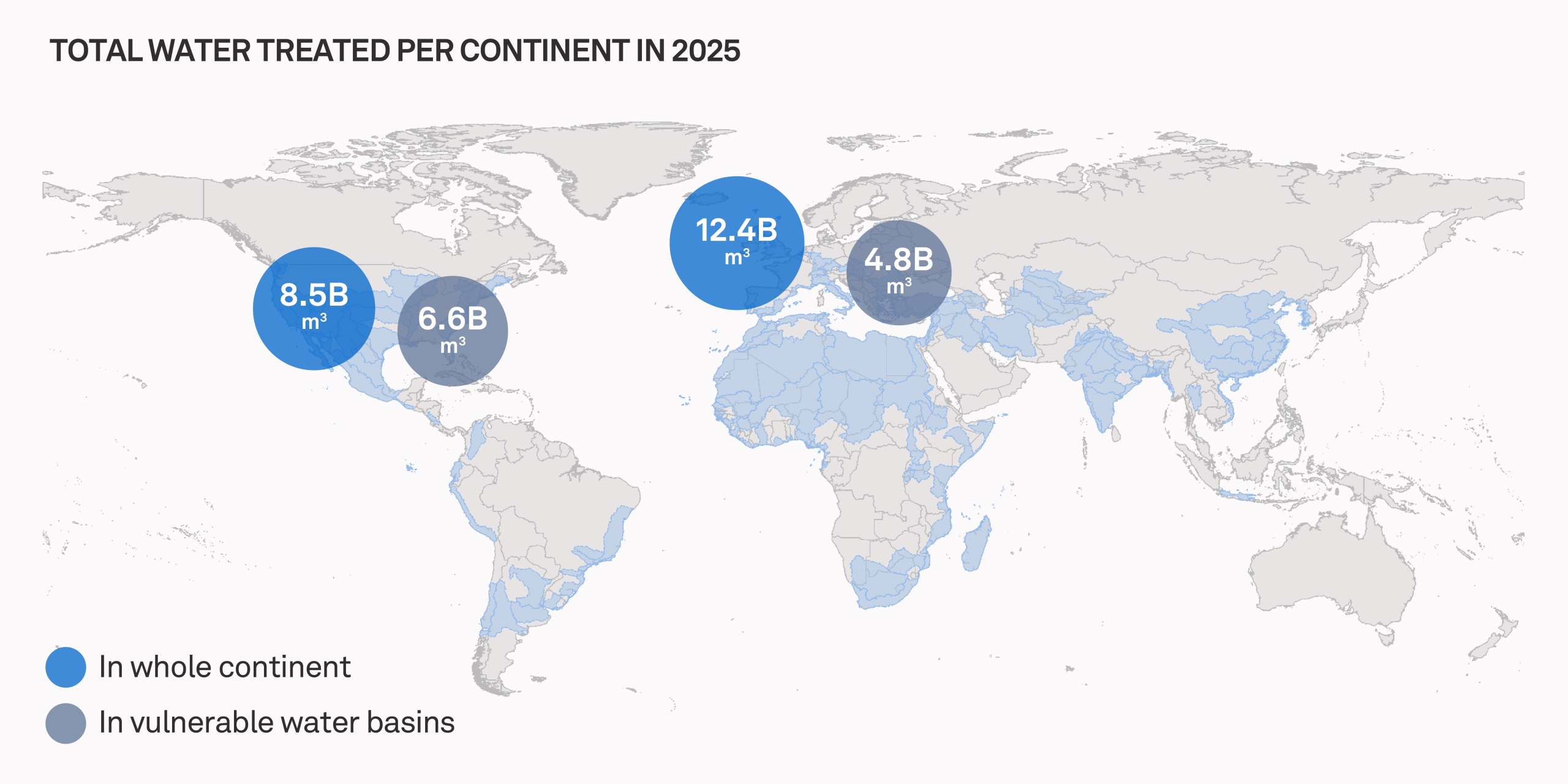
Of the 21 billion m3 of water treated, reused and recycled, over 11 billion is in water scarce areas (vulnerable basins). Kemira’s largest impact is in North America and Europe, in basins such as Rhein, Danube, Missisippi and Missouri.
Besides the large quantities of water treated reused and recycled, Kemira’s chemistry and services also improve the quality of the water. Our water solutions enable the removal of an estimated 90,000 tonnes of phosphorus from wastewater every year, reducing nutrient pollution and helping prevent eutrophication across the regions where our solutions are used.
Top list of water scarce areas / water basins where we support our customers: